Amazon Commits Up to $50 Billion to Expand AI Infrastructure for U.S. Government
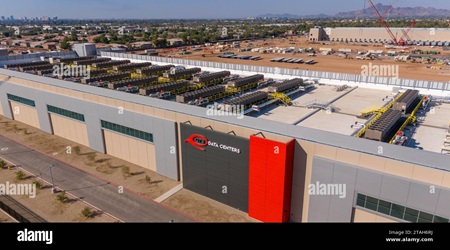
AmazonAn aerial view of the QTS Data center under construction in Phoenix, Arizona

SEATTLE & WASHINGTON, D.C. (December 4, 2025) — Amazon (NASDAQ: AMZN) announced plans to invest up to $50 billion to dramatically expand artificial intelligence (AI) and supercomputing infrastructure for U.S. government clients served through Amazon Web Services (AWS). Construction will begin next year on a new series of advanced data centers that will deliver 1.3 gigawatts of additional AI and supercomputing capacity.

AWS currently supports more than 11,000 government agencies, providing secure cloud-computing tools, compliance frameworks, and governance systems for both unclassified and classified data environments.

The new investment is designed to accelerate federal agencies’ ability to conduct simulation, modeling, and data-driven decision-making using advanced AI tools. The initiative directly aligns with the Trump Administration’s AI Action Plan, unveiled in June 2025.

“Our investment in purpose-built government AI and cloud infrastructure will fundamentally transform how federal agencies leverage supercomputing,” said Matt Garman, CEO of AWS. “We’re giving agencies expanded access to advanced AI capabilities that will enable them to accelerate critical missions—from cybersecurity to drug discovery. This investment removes long-standing technology barriers and positions America to lead in the AI era.”

Amazon’s announcement marks the latest significant move by the private sector to bolster government AI capacity. In September, Meta disclosed a partnership with the U.S. General Services Administration (GSA) to deploy its Llama open-source AI platform for federal use. Earlier in the year, OpenAI, Oracle, and SoftBank jointly revealed a $500 billion commitment for “Project Stargate,” a large-scale initiative to build national AI infrastructure.

Through Amazon’s investment, federal agencies will gain expanded access to AWS’ full suite of AI services, including Amazon SageMaker for training and customizing models and Amazon Bedrock for deploying models and agents. Agencies will also be able to use AI systems from Anthropic’s Claude family of language models, as well as semiconductors from NVIDIA and Amazon’s Trainium AI chips.

Amazon has not disclosed specific details regarding the locations or timelines of the forthcoming data centers, though the company reportedly purchased a $700 million site in Bristow, Va. for future development.

This AI expansion adds to Amazon’s year of aggressive data-center investment. In 2025, the company also committed $20 billion to Pennsylvania, $11 billion to Georgia, and $10 billion to a new data center campus in North Carolina.


Tucson’s Q3 Retail Market Report: Small-Shop Scarcity vs. Big-Box Availability

Q3 Retail

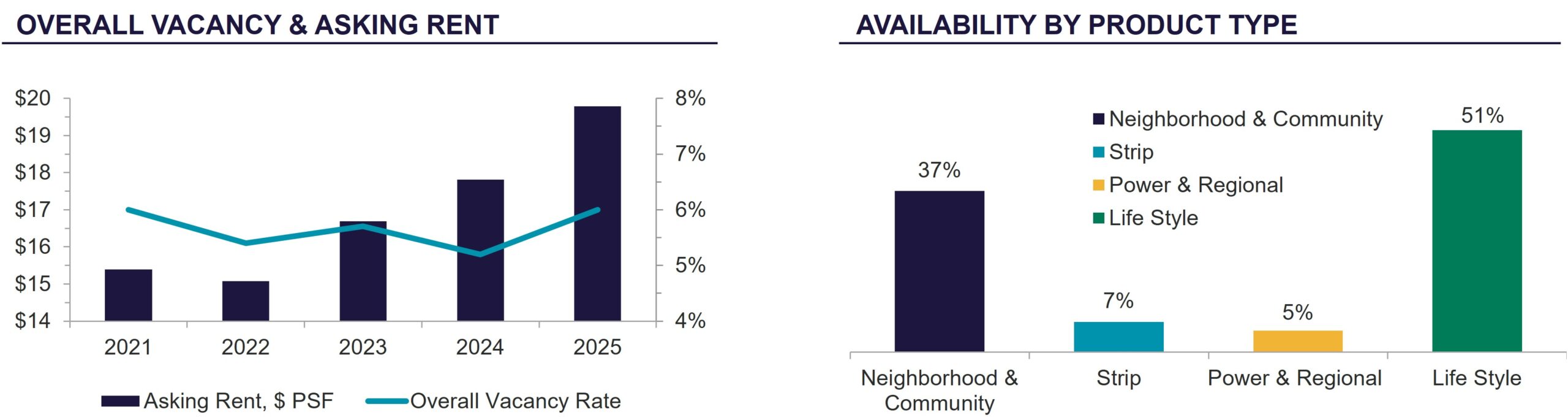
TUCSON, AZ (December 4, 2025) — In Q3, Tucson’s retail market remained balanced amid cautious optimism, with vacancy rising slightly to 6.0% due to larger store closures. Tucson’s retail sector was defined by steady fundamentals, targeted expansion in niche segments, and cautious upward pressure on rates.

Smaller-format availabilities under 4,000 square feet (sf) were limited with vacancy at just 2.1%, underscoring few options for shop space operators. Elevated construction costs and interest rates restrained speculative development, keeping new supply muted.

Leasing activity is returning to rebound to pre-pandemic levels, with space demand centered on value, experiential, and fitness-oriented users. Discounters and resale operators were actively backfilling big-box vacancies, while health, wellness, and indoor recreation tenants expanded their footprints.

Infill and adaptive reuse projects gained traction as cost pressures discouraged large ground-up builds. Asking rents climbed 4.8% YOY, reflecting stronger momentum, though average rates still sat below national benchmarks. The affordability of Tucson’s retail space remained advantageous in attracting regional and national tenants. Supply constraints kept vacancy from climbing sharply and rent growth may accelerate if tenant demand persists.

Pricing reflected a market in equilibrium with steady rent growth and stability across most segments. Tucson’s average retail lease rates held near $20 per sf in Q3. Roughly 20% below the U.S. average, but posted annual growth of 4.8%, outpacing national trends. Affluent submarkets such as Foothills and Oro Valley commanded notable premiums due to strong household incomes and luxury retail demand.

Limited new construction and restrained supply applied modest upward pressure on rents, keeping market conditions balanced between landlords and tenants. Large-format may experience downward rate adjustments as vacancy builds, but smaller infills, fitness, and experiential users continued to lease at prevailing rents.

Read the full report here.


Retail market graphs showing Tucson’s overall vacancy and asking rent trends from 2021 to 2025, and retail space availability by product type in Q3 2025.


Streamline Capital Group leverages milestones to drive future success in its Metro Phoenix portfolio

Streamline Capital Group

MESA, ARIZONA (December 4, 2025) – Streamline Capital Group, a Mesa-based real estate investment firm specializing in Class B and medical office properties, continues to accelerate its momentum across the Metro Phoenix market.

With a track record of value-add execution, strategic leasing, and vertically integrated operations, the firm is proud to announce key portfolio achievements.

Since acquiring The Grand on 44th, a 40,000 SF property in June 2023, Streamline Capital Group has implemented a capital improvement and leasing program that has revitalized the asset and significantly increased occupancy. The building, located at 44th Street and Thomas Road in Phoenix, is now 87 percent leased, driven by the recent long-term commitment from Goldberg & Osborne, Arizona’s leading personal injury law firm.

In Mesa, Twelve 34 Power, a 19,000-SF professional and medical office building acquired in February 2024, has now reached 100 percent occupancy. After executing an operational overhaul that included capital enhancements, lease repositioning, and property management optimization, Streamline has maximized value for both investors and tenants.

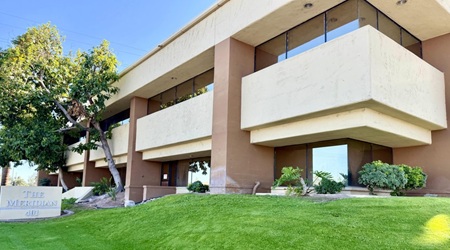
Streamline Capital Group is now under contract to acquire its next value-add opportunity: a Class B medical office property at 401 W. Baseline Road, in Tempe, Arizona, currently known as The Meridian. The firm will rebrand the property as Tempe Crossings and implement its signature improvement strategy.

Renovations will focus on the exterior and common interior areas, with the asset expected to come online in early 2026.

“Our mission is not just about owning real estate. It’s about transforming properties, delivering reliable returns to our investors, and contributing to the economic vitality of our communities. The success we’ve seen in Phoenix and Mesa underscores the strength of our value-add strategy, and we’re excited to bring that same momentum to Tempe with Tempe Crossings,” said David Hrizak, CEO of Streamline Capital Group.

Founded in 2022, Streamline Capital Group acquires and repositions income-producing medical and Class B office buildings across high-growth markets in Metro Phoenix. With vertically integrated development and management arms – Streamline Development and Streamline Asset Management – the firm maintains full control of the investment lifecycle, ensuring cost efficiency, tenant satisfaction, and strong investor returns.

For more information about The Streamline Companies and investment opportunities with Streamline Capital Group, visit thestreamlinecompanies.com.